

I moved to Japan speaking no Japanese at all.
So I know what it is to stand at a post office counter and not be able to explain what I want, or to sit in a doctor’s waiting room not sure I’ve understood what I’ve just been told. There were days I barely spoke to anyone. Not because I had nothing to say. I just didn’t have the words yet.
Then I lived the other half of it: the slow, often frustrating, occasionally wonderful business of building a language from nothing. By the time I left Japan I could hold a proper conversation, get through an ordinary day without thinking about it, and read the culture in a way you just can’t from outside the language.
That experience sits underneath everything I do now. To me a language is not just a skill to be acquired and ticked off. It is the thing that let me actually live somewhere instead of just getting by in it: have friends, join in, belong. A programme that works lets people across that line. One that doesn’t leaves them stuck just short of it, and closing that gap is more or less what I do for a living.
What I do
I help ESOL providers, refugee education organisations, and mission-driven EdTech platforms understand why their language programmes aren’t working, and fix them.
Most jobs come down to one of three things, or some mix of them: working out why an existing programme isn’t getting the results it should, designing a new programme or curriculum from scratch, or developing the teachers and tutors who actually deliver it. Usually they turn out to be linked. A programme that underperforms tends to have something wrong in the design, the delivery and the way outcomes are measured all at once.
I work at the strategic level rather than in the classroom, but I’ve spent enough years in the classroom to know what good programme design looks like from the inside.
Background
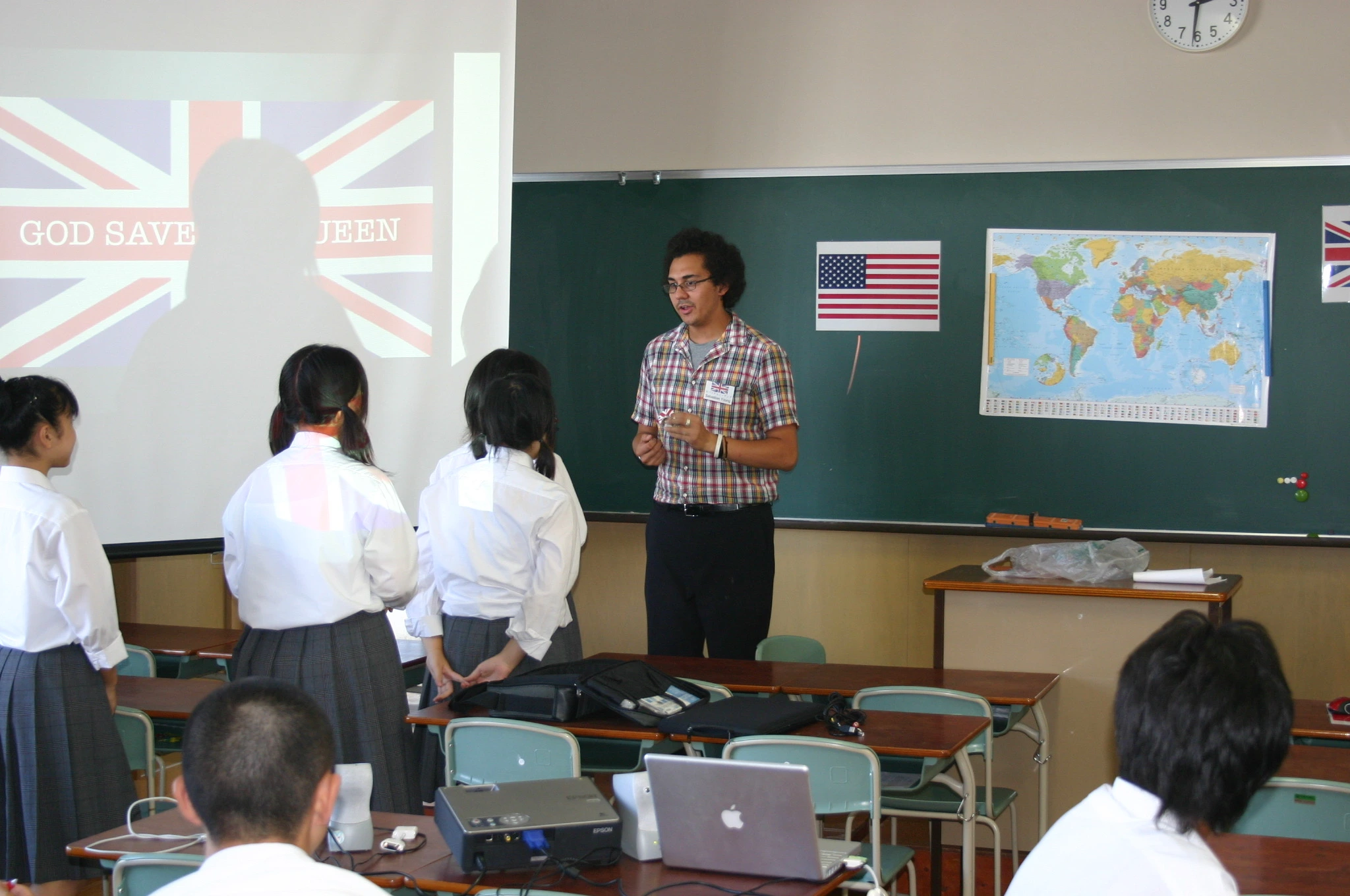
Over fifteen years I’ve worked in about as wide a range of language-learning settings as you could find: elementary schools in rural Japan, specialist reading centres in Singapore, online platforms serving thousands of learners from dozens of language backgrounds.
At Akita City Board of Education I spent five years designing and leading English programmes across several schools, building teaching capacity among educators who had never taught English before. ALTIA Central in Anjo brought me in to build an entire English curriculum where there was none, writing the programme and at the same time training the teachers who’d run it on their own after I left. And at I Can Read in Singapore I used the centre’s diagnostic assessment framework with young learners across a ten-year age range, designing an individual placement strategy for each child and tracking progress against its sixteen criteria every term.
More recently I co-founded English Nexus Online, an online English platform for Japanese learners, where I designed the whole programme, built the digital side of it, and set up the quality framework that governs how lessons are taught.
What all of this has given me is the kind of thing you can’t really get from training alone: a feel, built up in practice, for how learners actually progress, where programmes tend to let them down, and what it takes to design something that holds up in real use and not just in a document.
Qualifications
MA Applied Linguistics and TESOL — With Merit University of Leicester, UK
My MA research looked at how culture and language learning interact in Japanese schools, which has fed directly into the programme design I’ve done since. The course covered materials design and development, second language acquisition theory and intercultural communication.
BA (Hons) Journalism — 2:1 University of Lincoln, UK
TEFL with Teaching Young Learners (TEYL) Intesol Worldwide (ALAP Accredited)
How I work
Every engagement starts with a conversation, not a pitch. Before I suggest anything I want to know what you’re trying to achieve, what you’ve already tried, and where you think the real trouble is. The problem you walk in with and the problem underneath it are often not the same one. Working that out before prescribing anything isn’t just tidy consulting; it’s the difference between work that changes something and work that ends up as a report nobody opens again.
I work remotely, with clients in the UK, Canada and further afield. For bigger pieces of work I can travel to the UK for workshops, observation visits or stakeholder meetings, wherever being there in person actually earns its keep.
I don’t run a lot of clients at once. I take on a handful of engagements at a time, so the organisations I work with get my full attention instead of a sliver of it.
Why this work
When I arrived in Japan I fully intended to learn the language, and for the first few months I picked it up slowly, enough to get by and make a bit of progress. What made me finally take it seriously was jealousy. I’d watch the other foreign teachers in Akita move through Japanese life like they belonged in it, real friendships, real conversations, the actual texture of the place, while I felt like I was skating across the surface of somewhere I was living in but hadn’t really entered. That’s when something shifted. I stopped being satisfied with simply getting by and started putting in the work.
That experience taught me something no methodology textbook had: motivation isn’t a fixed trait people either bring or don’t. Circumstances produce it, or fail to. And a programme that grasps that is built differently from one that treats motivation as the learner’s problem to solve.
The organisations I most want to work with are the ones supporting migrants, refugees and newcomers, people going through more or less what I went through in Japan, except with far higher stakes and far less to catch them if they fall. When that kind of programme works, lives genuinely change. When it doesn’t, the cost is easy to miss but real: isolation, doors that stay shut, a life lived at arm’s length from the place you’re in.
That’s why I do this work. And it’s why I care whether it’s done well.